Top Natural Flavors in Organic Products What You Need to Know
The demand for organic products continues to rise. In recent years, consumers have become more aware of their choices. According to a report by the Organic Trade Association, organic food sales reached $61.9 billion in the U.S. in 2021. This growth reflects a shift towards healthier, eco-friendly options.
Among these products, organic natural flavors play a vital role. They enhance taste and appeal, making organic offerings more attractive. However, not all flavors are created equal. Some brands still rely on synthetic options, which can undermine organic claims. Transparency in sourcing is essential for building trust.
Understanding the significance of organic natural flavors helps consumers make informed decisions. Many are unaware of the differences between artificial and natural flavors. Leading industry reports emphasize the value of genuine, plant-derived ingredients. As awareness grows, brands need to prioritize authenticity. This transition is crucial in meeting consumer expectations while maintaining standards.

Top Natural Flavors in Organic Products: An Overview
Natural flavors are key in organic products. They enhance taste and appeal and provide a more authentic experience. The term "natural" means they come from plant or animal sources. Common examples include vanilla, citrus, and berry flavors. These add complexity without synthetic additives.
It's essential to understand the source of these flavors. For example, vanilla can be extracted from vanilla beans or synthesized in a lab. Transparency is crucial. Consumers should know what they're consuming. Not all natural flavors are created equal. Some may still undergo processing that alters their original state.
Moreover, the appeal of natural flavors varies. Some people love fruity profiles, while others prefer herbal notes. Experimentation is often necessary. A balance is needed between variety and health. Complicated flavor profiles can sometimes overshadow the intended taste. Keeping it simple might yield more enjoyable results.
Top Natural Flavors in Organic Products: An Overview
| Flavor |
Source |
Common Uses |
Health Benefits |
| Vanilla |
Vanilla beans |
Baking, desserts, beverages |
Antioxidant properties, mood enhancer |
| Lemon |
Lemon peel |
Cooking, drinks, salad dressings |
Boosts immunity, aids digestion |
| Mint |
Mint leaves |
Teas, desserts, candies |
Digestive aid, refreshing effect |
| Cinnamon |
Cinnamon bark |
Baking, breakfast dishes, beverages |
Anti-inflammatory, regulates blood sugar |
| Ginger |
Ginger root |
Cooking, teas, health supplements |
Anti-nausea, anti-inflammatory |
Understanding Natural Flavors and Their Role in Organic Foods
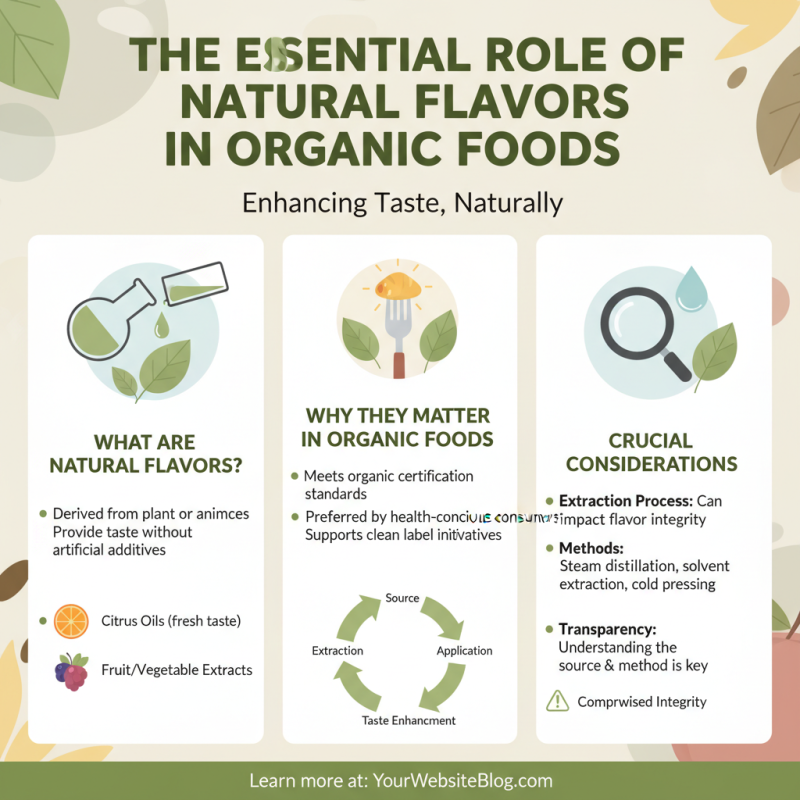
Natural flavors are essential in organic foods. They enhance taste without artificial additives. These flavors come from plant or animal sources. For instance, citrus oils give a fresh taste. It’s crucial to understand how they are extracted and used. Sometimes, the extraction process can compromise the integrity of the flavor.
In organic products, transparency is vital. Consumers deserve to know where their flavors come from. However, the term "natural flavors" can be vague. This ambiguity raises questions about ingredients. Some people may wonder if flavors are truly natural. It’s important to read labels carefully. Look for certifications that ensure quality. Knowing the source can help make informed choices.
Flavor can shift experiences dramatically. A product with rich, genuine flavor can evoke memories. Yet, not all natural flavors are equal. Some may use low-quality sources. This variation can affect both taste and health. It’s important to seek brands that prioritize quality and sustainability. Finding balance between flavor, health, and authenticity is a journey.
Common Types of Natural Flavors Used in Organic Products
Natural flavors play a significant role in organic products. These flavors can come from various sources, such as fruits, vegetables, and herbs. According to a recent industry report, natural flavors comprise about 30% of the ingredients in organic foods. Many consumers prefer these over artificial flavors due to health concerns.
Some common types of natural flavors include vanilla, citrus, and berry extracts. Vanilla is particularly popular, used in both sweet and savory products. Citrus flavors, like lemon and orange, add freshness. Berry extracts, such as raspberry and blueberry, bring vibrant color and taste. These flavors enhance the overall appeal of organic products.
Tip: When choosing organic products, check the ingredient list for natural flavors. This ensures you’re selecting healthier options. However, not all natural flavors are created equal. Some may undergo extensive processing, losing their benefits. Always seek transparency in sourcing. Understanding these flavors can lead to more informed choices.
Health Benefits and Concerns Related to Natural Flavors
Natural flavors are often celebrated in organic products for their ability to enhance taste without artificial additives. These flavors are derived from plant or animal sources, making them a popular choice among health-conscious consumers. However, it is essential to understand both their benefits and potential concerns. Many people enjoy the vibrant taste they bring to food, contributing to a more enjoyable eating experience.
Despite their natural origins, these flavors can be complex. The extraction process may involve chemicals, which some consumers find troubling. Over time, debates have emerged about what constitutes "natural." Transparency is key. Consumers should seek clarity on the flavoring processes used. Not all natural flavors are created equal—some may lack nutritional value. It's important to ask questions and do research before choosing products.
Health benefits can include improved satisfaction with meals, leading to better eating habits. However, some individuals may experience sensitivities or allergic reactions. It's crucial to listen to your body. Enjoying natural flavors should never come at the expense of understanding their true impact. Always consider individual responses to these ingredients, and reflect on what balance means in a healthy diet.
Top Natural Flavors in Organic Products
Regulatory Standards for Natural Flavors in Organic Certification
Natural flavors are essential in organic products, enhancing taste without synthetic additives. However, compliance with regulatory standards is crucial. In the USA, the USDA and the FDA establish the guidelines that define natural flavors. These regulations require flavors to be derived from plant or animal sources, ensuring they are free from artificial ingredients.
Recent studies show that about 74% of consumers prefer organic items with natural flavors. This trend emphasizes the need for transparency in labeling. Many organic product manufacturers face challenges in sourcing and documenting their natural flavors. A 2022 report from the Organic Trade Association highlighted that over 50% of organic producers struggle with compliance due to regulatory complexities.
Not meeting these standards can lead to mislabeling. This not only harms consumer trust but also puts businesses at risk of penalties. Every ingredient counts. Understanding the source and production of natural flavors is key. Flavors derived from organically grown ingredients must also adhere to strict processing conditions. This adds another layer of complexity for manufacturers striving for organic certification.