Loading...

2026 Top Strawberry Flavor Extract Types for Buyers?

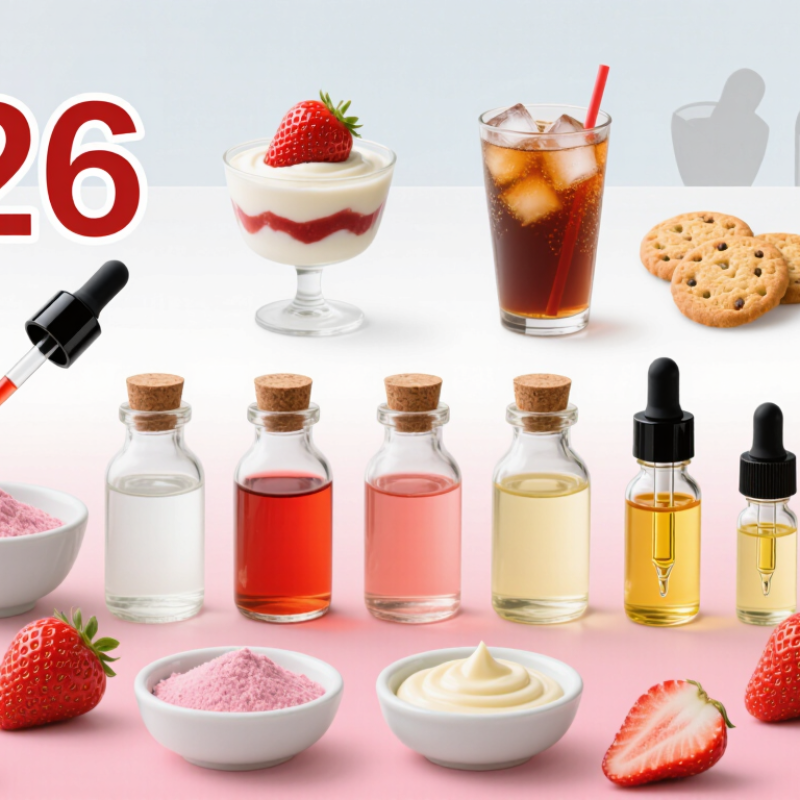
In 2026, buyers comparing strawberry flavor extract need more than a tempting aroma or bright color. They need to know how each type performs in its intended product. Liquid extracts are easy to blend into beverages, sauces, and fillings. Powdered versions can suit dry mixes, while water-soluble and oil-soluble options behave differently across recipes. Natural and other flavor categories may also differ in taste, labeling, sourcing, and price. The name alone is not enough.

Small differences matter. A strawberry note that tastes fresh in a chilled drink may seem muted after baking. A strong candy-like profile may work in confectionery but feel out of place in yogurt. Request samples and test them in the actual formulation, at the expected serving temperature. Taste it cold. Review the supplier’s technical sheet for dosage guidance, solubility, storage conditions, and batch consistency. Ask for relevant food-grade documentation and clear information about ingredients and allergens. These details help buyers compare products on more than price.

This guide introduces common extract types and practical questions for evaluating them. It also considers how application, processing, and desired flavor profile influence selection. Supplier claims deserve careful review; descriptions such as “authentic” do not guarantee a close match to ripe fruit. Even a well-planned test has limits, since ingredients and production conditions can shift the final taste. There is no universal winner. The best choice is the one that delivers a consistent strawberry character in your product, with specifications your team can verify.
2026 Top Strawberry Flavor Extract Types for Buyers?

What Strawberry Flavor Extract Is and How It Is Made

What Strawberry Flavor Extract Is and How It Is Made

Strawberry flavor extract captures or recreates the fruit’s sweet, floral, and slightly tart aroma. It may come from strawberries themselves, or from flavor compounds blended to deliver a consistent profile. The distinction matters: “strawberry” on a product description does not, by itself, explain the source or extraction method. Buyers should check the technical specification.

Production often starts with ripe fruit, which is crushed or macerated to release juice and aroma. The mixture may be filtered and concentrated; gentle processing can help preserve delicate, heat-sensitive notes. Some makers capture aroma separately and blend it back into the extract.

A useful reference point is FAOSTAT’s estimate of about 9.6 million tonnes of strawberries harvested worldwide in 2022. That large crop does not guarantee uniform flavor. Peer-reviewed research by Schwieterman and colleagues in PLOS ONE (2014) documents the diverse volatile compounds behind strawberry aroma. A small change in cultivar or ripeness can shift the result. The process is not perfectly predictable.

Tips: Ask for the extraction method, carrier, and recommended use level. Compare samples in your own recipe, not just by smelling them neat. Small detail: heat can mute fresh, fruity notes. A sample that tastes bright in cold water may seem softer in baked goods. That difference deserves a real test.

Which Strawberry Extract Types Are Available to Buyers in 2026

Buyers in 2026 can choose from several strawberry ingredient types, but “extract” is not always used consistently. Liquid natural extracts may be made with water, alcohol, or glycerin, and their aroma can vary with the fruit and extraction method. Some suppliers offer strawberry juice concentrates instead. These contribute fruit solids and color, not just aroma. Small distinction. It matters in a clear drink.

Powdered options include spray-dried or freeze-dried strawberry ingredients, often blended with a carrier to improve handling and solubility. Natural strawberry flavor preparations are another option, while nature-identical or other synthetic flavorings can provide a more consistent profile. Check the specification sheet for source, carrier, solvent, concentration, and recommended use level. The word “natural” alone does not tell you how strong or fruit-like a sample will taste.

Market context supports comparing formats rather than assuming one is best. Grand View Research’s Food Flavor Market report estimated the global food-flavor market at about US$16.7 billion in 2023, with projected growth through 2030. That figure covers many flavors, not strawberry extracts specifically. Ask for a sample and test it in the actual application: a warm filling, for example, can mute fresh top notes. Shelf stability matters, too. A detail buyers sometimes overlook.

How Natural, Nature-Identical, and Artificial Extracts Compare

2026 Top Strawberry Flavor Extract Types for Buyers?
How Natural, Nature-Identical, and Artificial Extracts Compare

Natural strawberry extracts may come from fruit or other natural flavor sources. They can offer ripe, fresh notes, but batches may vary with fruit quality and processing. Nature-identical flavors use compounds also found in nature, made through other processes. Their profile can be more consistent. Artificial flavors are formulated from flavoring substances to create a chosen taste. They may deliver a bright, candy-like strawberry note, though some profiles can seem less nuanced. Names and labeling rules vary by market, so check the supplier’s documentation for your intended destination.

That matters. A flavor that smells vivid in a bottle may fade in baked goods or turn overly sweet in a cold drink. Ask for technical details, ingredient information, and application guidance. Then test a small sample in the actual recipe. Compare aroma, aftertaste, color impact, and stability after storage. One detail is easy to miss: a stronger strawberry aroma does not always mean a more realistic taste.

Tips: Test each option at the same dosage in your own product. Keep notes on the first aroma and the flavor after a few minutes. If the result feels flat, adjust the recipe before assuming the extract is at fault.

How to Choose an Extract by Application, Flavor, and Form

Choosing a strawberry extract starts with its destination. For drinks, sauces, and other water-based recipes, a water-soluble liquid usually disperses easily. In chocolate, fillings, or fat-rich creams, an oil-compatible extract may blend more evenly. Powdered formats can suit dry mixes, though they may need extra mixing to prevent small clumps. Check the supplier’s usage guidance and test a small batch before adjusting a full production run.

Flavor matters as much as form. A ripe, jam-like profile can support baked goods, while a brighter, fresher note may fit yogurt or beverages. Some extracts taste candy-like; others lean toward cooked fruit. Ask for a sample and review its ingredient and allergen information. Then compare the flavor in the finished recipe, not just on a tasting strip. Heat, acidity, and sweetness can change what comes through.

Also check color, solubility, storage needs, and batch consistency. “Natural” does not guarantee a stronger or more authentic strawberry taste, so avoid choosing by label alone. Keep notes on dosage and processing conditions; even a small change can shift the result. I’d retest after scaling up, because a bench sample does not always behave perfectly in a larger batch. A little uncertainty remains.

2026 Top Strawberry Flavor Extract Types for Buyers? — How to Choose an Extract by Application, Flavor, and Form

“Strawberry flavor extract” can refer to a flavoring, a fruit-derived ingredient, or a delivery format. The categories below can overlap; confirm the ingredient identity, carrier, and labeling requirements with your supplier for the target market.

Type or format Typical flavor profile Common form and solubility Potential applications Buyer considerations
Natural strawberry flavoring Often designed for a fresh, ripe, or cooked-fruit impression; the profile varies with the flavor system and formulation. Commonly supplied as a liquid or powder; carrier and water or oil compatibility vary. Beverages, dairy products, confectionery, bakery fillings, and desserts. Ask what “natural” means under the rules in the sales market, and request the ingredient declaration, carrier details, and application-specific samples.
Artificial strawberry flavoring Can be formulated for a recognizable, consistent strawberry character; individual products differ in sweetness, candy-like notes, and fruit realism. Available in liquid and dry formats, with suitability depending on the carrier. Candy, drink mixes, baked goods, and other products where a stable flavor profile is required. Check permitted-use rules, labeling requirements, heat stability, and the finished product’s desired flavor intensity.
Strawberry juice concentrate or fruit preparation Contributes fruit-derived flavor along with varying amounts of color, acidity, and soluble solids. Usually a liquid concentrate, puree, or prepared fruit ingredient; not equivalent to a concentrated flavoring. Smoothies, cultured dairy, sauces, fillings, beverages, and fruit-forward desserts. Consider sugar and acid contribution, color variation, fruit content declarations, storage needs, and batch-to-batch consistency.
Water-soluble liquid flavor Profile depends on the flavor blend; designed to disperse in suitable aqueous systems. Liquid; may use water, alcohol, glycerin, or another carrier as specified by the supplier. Water-based beverages, syrups, jellies, and some dairy applications. Confirm clarity, pH tolerance, processing stability, and whether the flavor remains evenly dispersed in the actual recipe.
Oil-soluble or oil-dispersible flavor A strawberry flavor profile formulated for fat-containing or oil-based systems; not necessarily a pure oil extract. Liquid or paste; compatibility depends on the product’s composition and the fat phase. Chocolate, fat-based fillings, coatings, and selected bakery applications. Test dispersion, flavor release, and stability in the specific fat system; verify that the format is suitable for the manufacturing process.
Spray-dried or encapsulated strawberry flavor powder Can help protect volatile flavor components; the carrier may affect mouthfeel, flavor release, and ingredient declaration. Free-flowing powder; dispersibility and moisture sensitivity vary by formulation. Dry drink mixes, powdered desserts, snack coatings, and premixes. Review carrier ingredients, moisture barrier needs, particle handling, and flavor release after reconstitution or processing.
Freeze-dried strawberry powder Fruit-derived strawberry taste and color; intensity depends on fruit solids, processing, and the amount used. Dry fruit powder; may absorb moisture and can be less readily soluble than a purpose-made flavor powder. Bars, toppings, confectionery, dry mixes, and products seeking a fruit-ingredient contribution. Check fruit content, particle size, color variation, moisture control, and whether the texture is suitable for the product.
Emulsified or cloud-compatible strawberry flavor A flavor system intended to disperse in a beverage or other formula where a clear liquid flavor may not provide the desired appearance or stability. Liquid emulsion or dispersion; performance depends on the full formulation and processing conditions. Cloudy drinks, drink concentrates, and selected dairy-style beverages. Request tests for dilution, pH, heat treatment, and storage stability; confirm whether the system affects opacity or sedimentation.

Selection checklist: Match the format to the product’s water or fat phase, processing temperature, pH, target flavor profile, desired fruit content, labeling rules, and storage conditions. Validate shortlisted options in the finished recipe before purchase.

What Buyers Should Check for Quality, Labeling, and Storage

2026 Top Strawberry Flavor Extract Types for Buyers?
What Buyers Should Check for Quality, Labeling, and Storage

Strawberry flavor extracts may be water-soluble, oil-soluble, or carried in alcohol, glycerin, or another approved base. Match the type to the product: a clear drink and a fat-rich filling may need different solubility. Peer-reviewed strawberry-aroma reviews have catalogued more than 360 volatile compounds in the fruit, so one “strawberry” note cannot represent every cultivar or profile. Ask suppliers for a technical specification, certificate of analysis, allergen statement, and lot-specific sensory guidance. Check that the declared flavor description matches the product documentation. A vivid sample is not proof of consistent quality.

Label details matter. Codex’s General Standard for the Labelling of Prepackaged Foods, CXS 1-1985, sets out ingredient-list and labeling principles; exact local requirements can differ. Buyers should confirm the carrier, flavoring designation, allergen information, batch code, and date marking for their sales market. Keep the original container tightly closed, away from heat, sunlight, and moisture. Follow the supplier’s storage instructions, since carrier and formulation affect stability. Small details count.

Tips: Request unopened samples from more than one lot, then compare aroma and color side by side. Record the opening date and storage conditions. If a sample changes, investigate before scaling up. I would not rely on aroma alone; a strong first impression can hide weak documentation or poor batch consistency.

2026 Strawberry Flavor Extract Buying Checklist

Recommended buyer checks by area — counts reflect the checklist below, not market statistics.

Quality: product identity, sensory/application fit, and specification documents. Labeling: ingredients, allergens, lot identification, and date information. Storage: stated storage conditions and handling after opening. Liquid, powder, and oil-soluble flavorings may have different requirements; follow the product-specific label and supplier guidance.